
Sugar Import to China & Southeast Asia: GACC Registration & Requirements

China and Southeast Asia represent complex but significant sugar import markets, collectively importing 8–12 million metric tonnes annually. China is the world's second-largest sugar importer (after Indonesia) with strict factory registration requirements through GACC (General Administration of Customs of China) and a tariff-rate quota system that makes over-quota imports prohibitively expensive. Southeast Asian markets — Indonesia, Vietnam, Philippines, Malaysia — each maintain distinct regulatory frameworks ranging from Indonesia's state-controlled import monopoly to Malaysia's relatively open market. For suppliers targeting Asian markets, understanding GACC registration, navigating import licensing systems, managing quota allocations, and meeting halal certification requirements (particularly in Muslim-majority Indonesia and Malaysia) are essential for market access. Unlike the relatively transparent procedures in Europe or GCC countries, Asian markets often involve bureaucratic complexity, quota uncertainty, and payment risk that require experienced local partners.
This guide explains how to import sugar into China and major Southeast Asian markets — covering GACC registration, import licensing, quota systems, documentation requirements, and practical challenges.
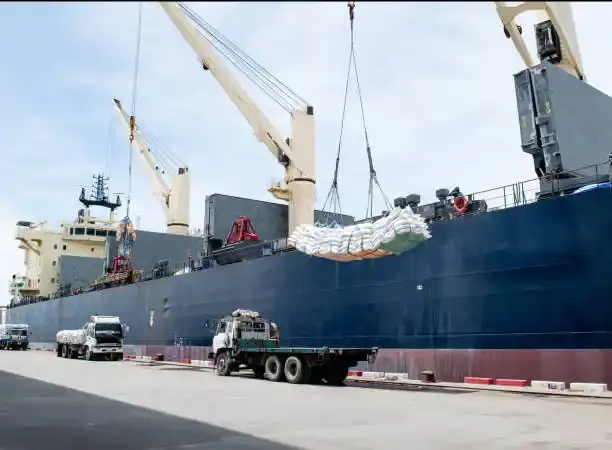
Asia-Pacific Sugar Import Market Overview
Major importers in the region:
China: 4–6 million MT annually (second-largest importer globally; volume varies with domestic production)
Indonesia: 3–5 million MT annually (largest importer globally; state-controlled via BULOG)
Vietnam: 500,000–800,000 MT annually (growing market with TRQ system)
Philippines: 200,000–500,000 MT annually (highly protected market with SRA control)
Malaysia: 1.5–2.0 million MT annually (open import market; significant re-export)
Singapore: 400,000–500,000 MT annually (trade hub; mostly re-export)
Import sources:
Thailand: Major regional exporter supplying most of Southeast Asia
Brazil: Competitive on price for China and Indonesia despite long transit times
India: Supplies Southeast Asia when Indian export policy permits
Australia: Supplies China and Southeast Asian markets; proximity advantage
Market characteristics:
High tariffs and quota systems in most markets (China, Indonesia, Vietnam, Philippines)
State control or influence over imports (China, Indonesia, Philippines)
Payment risk varies (China generally reliable; smaller Southeast Asian markets higher risk)
Documentation complexity (particularly China's GACC registration and health certificates)
For comprehensive context on how Asian regulations compare to other global markets, see regulations by country.
China — GACC Registration and Quota System
GACC Exporter Registration Requirements
The General Administration of Customs of China (GACC) requires all foreign food production facilities exporting to China to be registered before any shipments are permitted. This applies to sugar mills, refineries, and warehouses.
Registration process:
Application submitted by exporting country's competent authority (not by individual exporters) — e.g., Brazilian Ministry of Agriculture submits registration applications on behalf of Brazilian mills
GACC reviews facility documentation — production processes, quality control systems, food safety protocols
Facility inspection (for some origins and products) — GACC may conduct on-site inspections, though many sugar facilities are registered through document review or mutual recognition agreements
GACC issues registration number — facility receives unique GACC registration code
Registration published on GACC website in searchable database
Timeline: 6–18 months from application to approval for new facilities; faster for facilities from countries with established mutual recognition agreements (Brazil, Thailand, Australia have most mills pre-registered).
Who can apply: Individual exporters cannot apply directly. Applications must go through the exporting country's official food safety authority. This means small traders or brokers cannot register facilities — only established mills or refineries working through government channels.
How to Verify If Your Supplier Is GACC-Registered
Before contracting with a supplier for China shipments, verify they are GACC-registered:
Step 1: Request the supplier's GACC registration number
Step 2: Search the GACC database at: http://jckspaqj.customs.gov.cn (select "Imported Food Exporter/Agent Registration" section)
Step 3: Verify the registration shows:
Facility name matches your supplier
Registration is current (not expired or suspended)
Product category includes sugar/sweeteners
Red flag: If a supplier claims they can export to China but cannot provide a GACC registration number or the number doesn't appear in the database, they cannot legally export to China. Any shipment from an unregistered facility will be rejected at Chinese ports.
China's Tariff-Rate Quota (TRQ) Structure
China applies a TRQ system similar to the US:
In-quota imports: Approximately 1.95 million MT annually
Tariff rate: 15% ad valorem
Quota allocated to state-owned enterprises, licensed importers, and large food manufacturers
Over-quota imports: No quota limit, but tariff is 50%
Effectively prohibitive; over-quota sugar cannot compete with domestic or in-quota sugar
Over-quota imports are rare and occur only during severe domestic supply shortages
Accessing quota:
State-owned enterprises (COFCO, China National Cereals) receive automatic quota allocations
Private importers can apply for quota allocation through China's quota distribution system, but success rates are low for first-time applicants
Some quota is allocated to end-users (food manufacturers, beverage companies) who import directly
Reality for foreign suppliers: Unless you're selling to a Chinese importer who already has quota allocation, accessing the Chinese market is difficult. Most suppliers work with established Chinese trading companies or state-owned enterprises who hold quota.
Required Documentation for Chinese Customs
Documents required for sugar imports to China:
Certificate of Origin from exporting country
Health certificate issued by the exporting country's competent authority, meeting GACC specifications
Certificate of Analysis (COA) from an accredited laboratory
Phytosanitary certificate (if required for the specific origin)
GACC registration verification — shipment must reference the registered facility's GACC number
Commercial invoice, packing list, Bill of Lading (standard shipping documents)
Health certificate requirements:
Must be in Chinese or accompanied by certified Chinese translation
Must reference the GACC-registered facility
Must confirm product meets Chinese food safety standards (GB standards)
Must be signed by authorized official from exporting country's food safety authority
Language: All documents must be in Chinese or have certified Chinese translations. English-only documents are not accepted.
Port Clearance Procedures (Qingdao, Shanghai, Guangzhou)
Major Chinese ports for sugar imports:
Qingdao (Shandong province): Northern China; handles significant sugar volumes from Brazil and Thailand
Shanghai: Central coast; largest port overall; handles containerized and bulk sugar
Guangzhou/Shenzhen (Guangdong province): Southern China; closest to Southeast Asian suppliers
Clearance process:
Pre-arrival declaration filed electronically via China Customs system
Document verification — Customs verifies all certificates, GACC registration, quota allocation
Physical inspection (if selected) — 20–30% of shipments inspected; samples sent to GACC labs for testing
Laboratory testing (if selected) — Microbiological, chemical, heavy metals testing; takes 5–10 days
Duty payment — 15% in-quota duty or 50% over-quota duty paid
Release — Cargo released to importer
Clearance timeline:
Compliant shipment without inspection: 3–7 days
Shipment selected for inspection and testing: 7–14 days
Shipment with document issues or failed lab tests: Indefinite hold or rejection
Rejection reasons:
Supplier not GACC-registered
Health certificate doesn't meet GACC specifications
Lab testing reveals contamination or quality failure
Missing Chinese translations of documents
No quota allocation (for in-quota rate)
Indonesia — Import Licensing and State Control
API-U Import License Requirements
Indonesia requires all food importers to hold an API-U (Angka Pengenal Importir-Umum) general import license issued by the Ministry of Trade.
Obtaining API-U:
Company must be registered in Indonesia (domestic company or foreign company with local subsidiary)
Submit application to Ministry of Trade with company documents, tax registration, business plan
Ministry reviews and issues API-U license
License valid for 5 years; renewable
Who needs API-U: All companies importing sugar for commercial purposes. Exemptions exist for government procurement and certain state-owned enterprises.
Timeline: Initial API-U issuance takes 2–4 weeks; renewals process faster.
BULOG's Role in Sugar Imports
BULOG (Badan Urusan Logistik) is Indonesia's state-owned logistics agency that controls much of Indonesia's sugar import market.
BULOG's functions:
Imports sugar on behalf of the government to stabilize domestic prices
Distributes imported sugar to markets nationwide
Sets import volumes based on domestic production forecasts and consumption needs
Issues import recommendations that affect private sector quota allocation
Private sector imports: While private companies with API-U licenses can import sugar, the government often restricts private imports during periods when domestic production is sufficient. Private importers face:
Import quota allocations determined by Ministry of Trade (based on BULOG recommendations)
Restrictions on import timing (often limited to specific months)
Requirements to purchase certain quantities of domestic sugar before importing (domestic purchase obligations)
Reality: Indonesia's sugar market is unpredictable for private importers. Import windows open and close based on government policy, domestic harvest results, and price stabilization goals. BULOG handles the majority of imports.
Tariff Structure and Import Quotas
Import duty: 5% in-quota; 25–30% over-quota (rates vary annually based on government policy)
Import quota: Variable; set annually by Ministry of Trade based on domestic supply/demand balance
Typical quota allocation: 3–5 million MT annually total (combining BULOG and private sector allocations)
Additional regulations:
Refined sugar (ICUMSA 45–150): Generally permitted for import
Raw sugar (ICUMSA 600+): Restricted; only for refineries with government approval
Halal Certification Requirements for Indonesia
Indonesia is the world's largest Muslim-majority country. Halal certification is mandatory for imported food products including sugar.
Requirements:
Halal certificate issued by a recognized Islamic certification body (JAKIM Malaysia, MUI Indonesia, IFANCA, etc.)
Certificate must be registered with MUI (Majelis Ulama Indonesia) before shipment
Certificate accompanies cargo and is presented to Indonesian customs
Acceptable certification bodies:
MUI (Indonesia): Domestic halal certifier; most recognized
JAKIM (Malaysia): Widely accepted
International bodies: IFANCA, HFA, and others recognized under mutual recognition agreements
Certificate validity: Typically 2 years; must be renewed before expiration
Penalty for non-compliance: Shipments without valid halal certification are rejected at Indonesian ports.
Port Procedures (Jakarta, Surabaya)
Tanjung Priok (Jakarta): Indonesia's largest port; handles majority of sugar imports
Tanjung Perak (Surabaya): East Java; second-largest port; serves eastern Indonesia
Clearance process:
Import declaration filed via Indonesia National Single Window (INSW)
API-U license and import quota allocation verified
Halal certificate and health certificate verified
Physical inspection (common; 30–50% of food shipments inspected)
Duty payment (5–30% depending on quota status)
Release to importer
Clearance timeline: 5–10 days for compliant shipments; 10–20 days if inspection or document issues arise
Port congestion: Jakarta experiences periodic congestion; demurrage risk is moderate to high during peak import seasons.
Vietnam — Growing Import Market
Import License from Ministry of Industry and Trade
Vietnam requires import licenses for sugar issued by the Ministry of Industry and Trade (MOIT).
License application:
Importer applies to MOIT with company documents, intended import volume, justification
MOIT reviews application against domestic supply forecasts
License issued if approved (valid for specific volume and time period)
Who receives licenses: Primarily domestic food manufacturers, beverage companies, and licensed importers with proven business operations.
Vietnam's TRQ System (In-Quota vs Over-Quota)
Vietnam applies a TRQ structure:
In-quota imports: Approximately 80,000–100,000 MT annually (varies based on domestic production)
Tariff rate: 5% ad valorem
Over-quota imports: No volume limit
Tariff rate: 40–50% (prohibitively expensive for most commercial applications)
Quota allocation: MOIT allocates quota to domestic food manufacturers, state-owned enterprises, and licensed importers based on demonstrated need and import history.
Documentation and Health Certificate Requirements
Required documents:
Import license from MOIT
Health certificate from exporting country
Certificate of Analysis (COA)
Certificate of Origin
Commercial invoice, packing list, Bill of Lading
Health certificate specifications: Must confirm product meets Vietnamese food safety standards; signed by competent authority in exporting country.
Port of Ho Chi Minh and Haiphong Clearance
Ho Chi Minh City (Saigon Port): Southern Vietnam; handles majority of containerized sugar imports
Haiphong (Northern Vietnam): Serves northern Vietnam and Hanoi region
Clearance timeline: 5–10 days for compliant shipments; longer if selected for inspection or testing.
Philippines — SRA Control and High Tariffs
Sugar Regulatory Administration (SRA) Import Allocations
The Sugar Regulatory Administration (SRA) controls all sugar imports to the Philippines.
SRA's role:
Determines annual import volumes based on domestic production forecasts
Allocates import quotas among domestic millers, refiners, and licensed importers
Monitors sugar prices and adjusts import policy to stabilize markets
Import Quota Distribution System
Who receives quota:
Domestic sugar mills and refiners (priority allocation)
Licensed importers with established operations
Food manufacturers with demonstrated sugar needs
Application process: Companies apply to SRA for import allocation; SRA evaluates applications and issues import permits.
Quota trading: Some quota allocations can be traded among licensed entities, creating a secondary market.
High Over-Quota Tariffs (50–65%)
In-quota tariff: 5% (for authorized imports within SRA allocation)
Over-quota tariff: 50–65% (prohibitive; effectively prevents unauthorized imports)
Result: The Philippines is one of the most protected sugar markets globally. Imports are tightly controlled to protect domestic sugar industry.
Working with Licensed Importers
Foreign suppliers cannot import directly to the Philippines — they must sell to Philippine-based licensed importers or millers who hold SRA import allocations.
Typical arrangement: Foreign supplier contracts with Philippine importer who has SRA quota; payment via LC; shipment to Manila or other Philippine ports.
Thailand — Exporter, Not Importer
Thailand is the world's second-largest sugar exporter (after Brazil), producing 10–12 million MT annually and exporting 7–9 million MT.
Thailand does not import sugar for domestic consumption. Small volumes of specialty sugars (organic, specialty grades not produced domestically) may be imported, but Thailand is fundamentally an export market for suppliers, not an import market.
Thai sugar supplies most of Southeast Asia — Indonesia, Vietnam, Philippines, Malaysia, Singapore — due to proximity and competitive pricing.
Malaysia and Singapore — Open Markets
Malaysia
Import regulations: Relatively open; no quota system or significant restrictions
Import duty: 0–5% depending on origin and trade agreements
Halal certification: Mandatory for food products; must be issued by recognized halal certifier (JAKIM preferred)
Documentation: Health certificate, COA, halal certificate, standard shipping documents
Ports: Port Klang (Kuala Lumpur), Penang, Johor serve most imports
Clearance: 3–7 days for compliant shipments
Singapore
Import regulations: Fully open market; no quotas, minimal restrictions
Import duty: 0% (free trade policy)
Documentation: Health certificate, COA, standard shipping documents
Port of Singapore: World's second-busiest container port; extremely efficient clearance (1–3 days)
Market role: Singapore imports sugar primarily for re-export to regional markets and for domestic food manufacturing/hospitality sectors. Many international sugar traders use Singapore as a regional hub.
Transit Times and Shipping Routes from Brazil to Asia
Brazil to China (Shanghai, Qingdao):
Transit time: 35–45 days (via Cape of Good Hope or Panama Canal)
Freight rate: $65–$100/MT
Brazil to Indonesia (Jakarta):
Transit time: 35–45 days
Freight rate: $65–$95/MT
Brazil to Vietnam (Ho Chi Minh City):
Transit time: 35–42 days
Freight rate: $65–$90/MT
Brazil to Philippines (Manila):
Transit time: 38–48 days
Freight rate: $70–$100/MT
Brazil to Singapore:
Transit time: 32–40 days
Freight rate: $60–$90/MT
Competitive disadvantage for Brazilian sugar: Asian buyers often prefer Thai, Indian, or Australian sugar due to shorter transit times (7–20 days) and lower freight costs ($30–$60/MT). Brazilian sugar competes in Asia primarily on price when global sugar prices are low.
For comprehensive guidance on transit times, shipping routes, and container logistics, see trade documents.
Challenges When Importing to Asian Markets
GACC registration barriers (China): Suppliers must be pre-registered with GACC, which can take 6–18 months. New exporters face long lead times to access the Chinese market.
Quota access difficulties: China, Indonesia, Vietnam, and Philippines all use quota systems. Private importers struggle to obtain quota allocations, particularly first-time importers.
Payment risk: Chinese importers generally honor LC commitments, but smaller Southeast Asian importers (Vietnam, Philippines, Indonesia) present higher payment risk. Insist on confirmed LCs from recognized banks for first transactions.
Regulatory unpredictability: Indonesia and Philippines adjust import policies frequently based on domestic production and political considerations. Import windows open and close with little advance notice.
Documentation complexity: China's requirement for Chinese-language documents, GACC registration verification, and specific health certificate formats creates administrative burden. Errors trigger cargo holds or rejection.
Long transit times from Brazil: 35–45 day ocean transits tie up capital and create inventory planning challenges. Thai and Australian suppliers have significant logistical advantages.
Halal certification requirements: Indonesia and Malaysia require halal certification, adding cost ($200–$500 per certificate) and administrative steps.
For detailed guidance on global tariff structures and how Asian tariffs compare to other markets, see import duties & tariffs.
Start Your Asian Sugar Import
China and Southeast Asia represent challenging but potentially lucrative sugar markets. China's GACC registration requirements, quota systems across multiple countries, state control in Indonesia and Philippines, and documentation complexity create barriers to entry — but these same barriers reduce competition and create opportunities for suppliers who successfully navigate the requirements.
Success requires working with GACC-registered facilities, partnering with local importers who hold quota allocations, ensuring halal certification where required, and managing extended transit times from distant origins like Brazil.
Ready to export sugar to China or Southeast Asia? Contact us for introductions to GACC-registered Brazilian mills, guidance on quota access strategies, local importer partnerships in China and Indonesia, and full documentation support including halal certification coordination. We work with experienced Asian import partners who navigate regulatory complexity and ensure successful market entry.


Comments